Shaker kitchen. Classic, made by hand.
Framed front, metal pulls, soft tones. Looks right in older flats, in private houses, and anywhere that wants character without leaning fully modern.
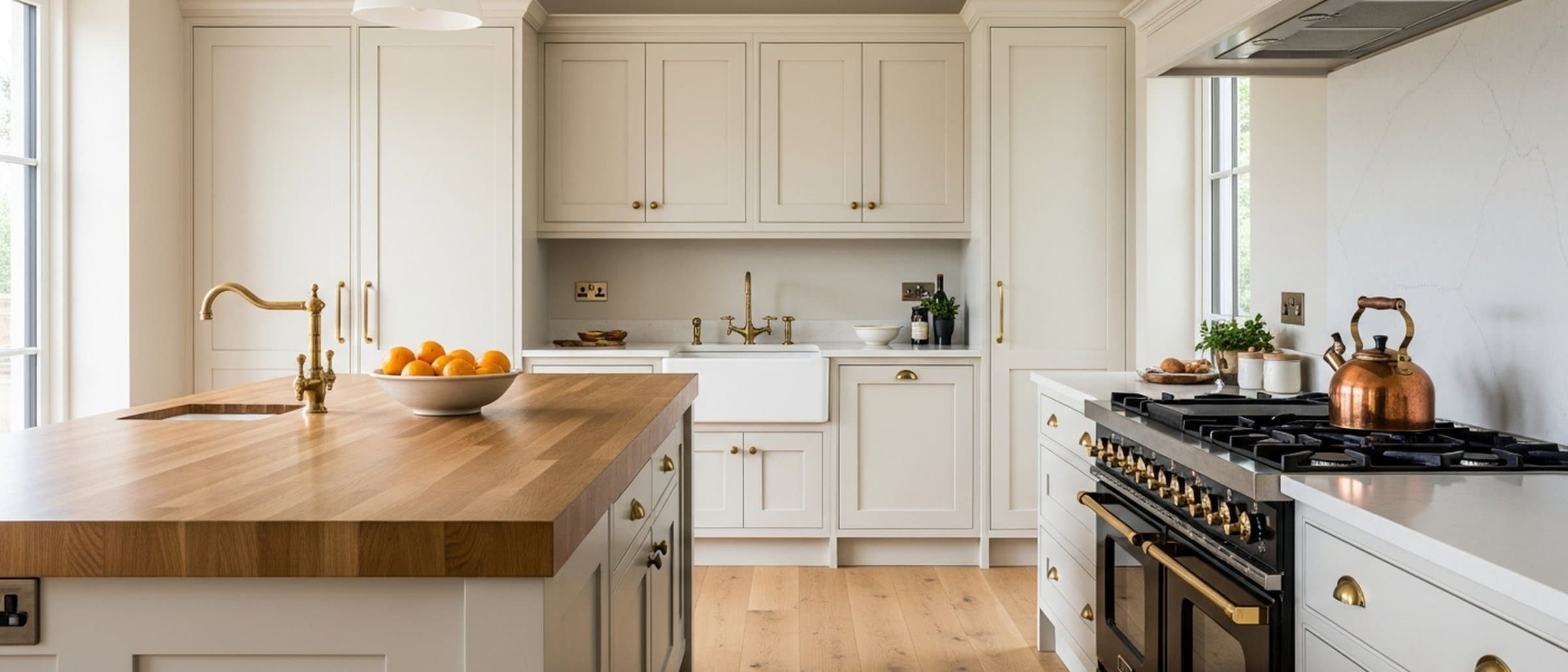
What makes a kitchen shaker
Framed front (Shaker frame)
A panel with a raised frame and a flat insert at the center. The absolute signature of the style.
Metal or brass pulls
Visible pulls — not tiny knobs, but 96-128 mm. Brass, brushed nickel, or matte black.
Soft colors, not just white
Warm white, sage green, deep navy, grey-beige. In Israel a mustard accent on the island alone works well.
Island with open legs
In most of our shaker kitchens the island isn't a closed box — it has exposed legs underneath, like a piece of furniture.
A countertop with character
Caesarstone Calacatta with veining, or solid wood on the island only. A fully white countertop breaks the proportion.


The specific materials we use in shaker
Solid oak for the front
Frame and insert from the same wood. This lets paint sit evenly and prevents cracks over time.
Oven-baked MDF
If you choose a color (white, sage, navy) — seven coats of polyurethane.
Brass or brushed nickel pulls
Several European suppliers. Through-bolted, not glued — they don't fall off after a year.
Caesarstone Calacatta / veined quartz
Pronounced veining that highlights the proportion of the framed front.
Questions about the shaker style
A style from a religious community in 18th-century America — simple, functional furniture with no extra decoration. The framed panel became its signature. Popular because it reads as both classic and modern at the same time.
Depends on color, pulls and countertop. Shaker in white with brass and a pronounced frame — reads classic. Shaker in navy with brushed nickel and a light countertop — reads fully modern.
Warm white — safe, works always. Sage green — a three-year trend, still has legs. Deep navy — works in flats with good light. Grey-beige — safe but a bit dull. Mustard on the island only — an accent that suits clients ready for a little risk.
A little. The framed front is extra production work, and brass pulls cost more than push-to-open hinges. The difference is around 8-12 percent.
Looking for a different style?
The scandinavian style — lighter, handleless, lots of light oak.